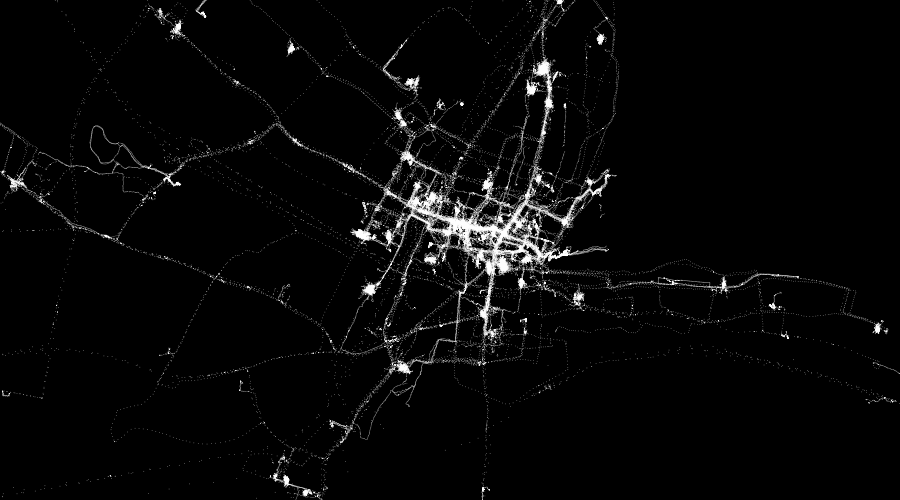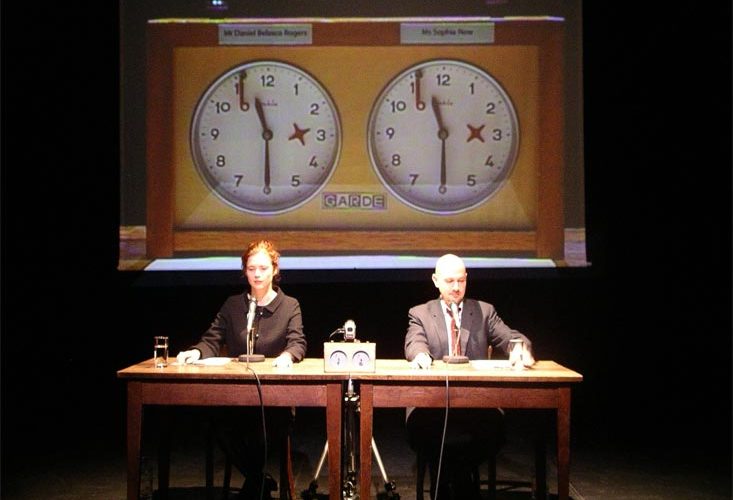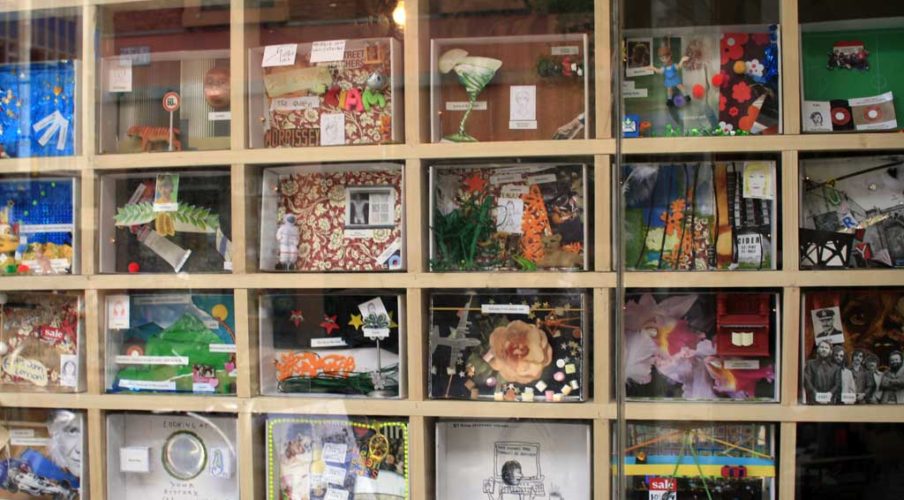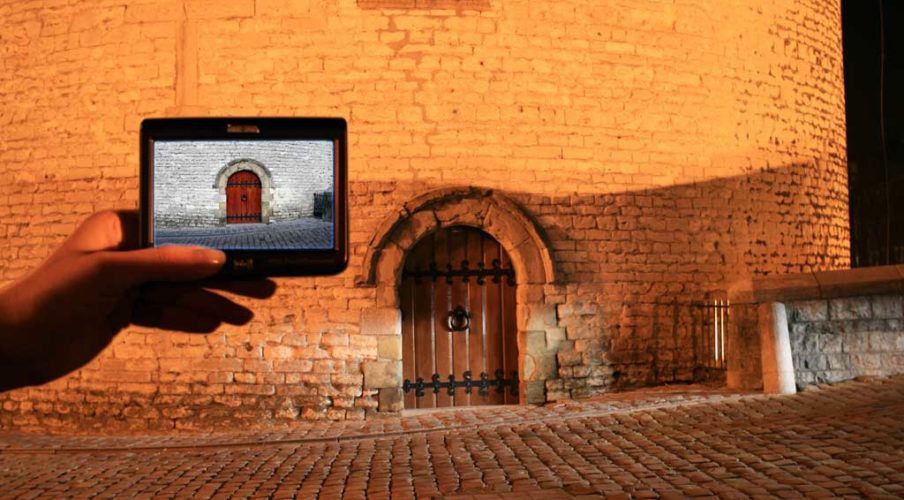
We continually record every journey we make with GPSs. Daniel has done this since 2003 and Sophia since 2007. The daily practice has a number of artistic outcomes outlined below as well as many social, ethical and aesthetic implications, which we make explicit in performance lectures and artist talks we give around exhibitions or commissions.
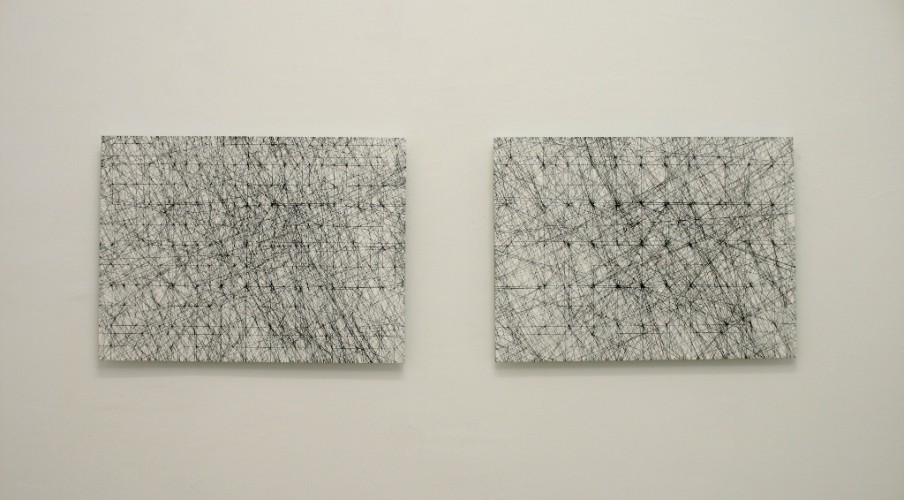
In 2011 we bought an old pen plotter (HP DraftPro EXL), the sort that architects used to use to print out plans before inkjet printers took over this role. After a bit of hacking to get it to accept modern pens (details on Dan's blog here), we now use it to print our GPS traces.
The difference between using a pen plotter and an inkjet plotter is not immediately apparent looking at the outcomes, however watching the process is an entirely different matter as the video above shows. Whereas the inkjet scans quietly across the paper from top to bottom, the pen plotter makes the pen repeat on the scale of a piece of paper, the journeys we made across a city or continent.
Because the process is also less controllable as the paper can easily rip or tear if the ink soaks it too much or the pen can stop functioning correctly, the results are somewhere between the reliable and identical outcome of a robust inkjet print and this much more tentative medium.
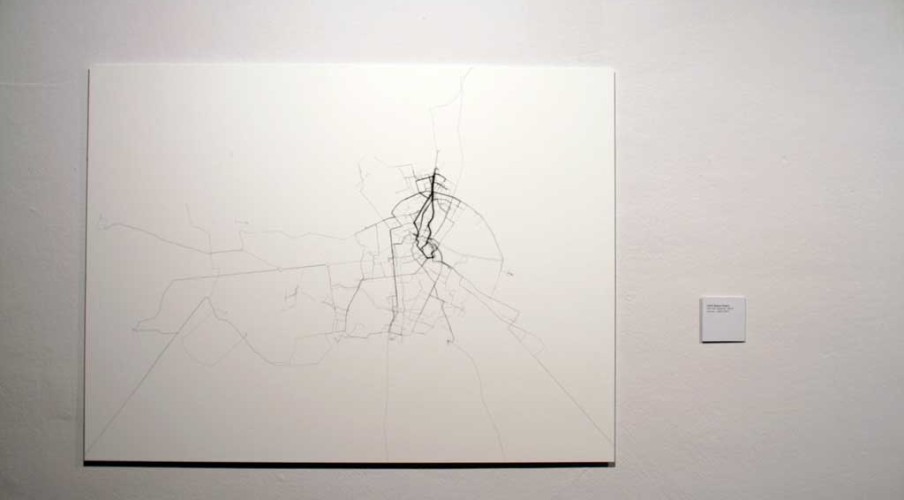
One of the most straightforward ways in which we present the practice of GPS trace collection is to make Giclée (Fine Art Ink-jet) prints, which we have printed onto rag paper and then mounted onto aluminium.
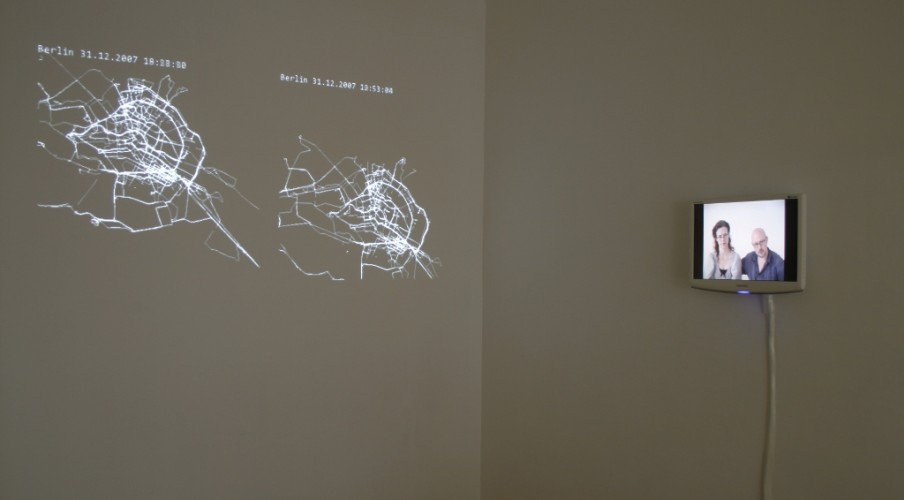
In 2010 we set ourselves the task of looking back over our traces for 2007 and using them as a prompt to remember what we were doing. The result became the two-channel video piece 'Narrating our Lines' which was first shown in its full form at Art Laboratory Berlin in early 2012.
For this piece we had a year's worth of GPS data sent to a laser which engraved a line for each journey we made onto the reverse of the clear acrylic sheet.
What we love about this way of visualising the GPS traces is how the reiterated streets cut a deeper groove into the acrylic which is eloquent about the way in which one moves in the routine of one's life.
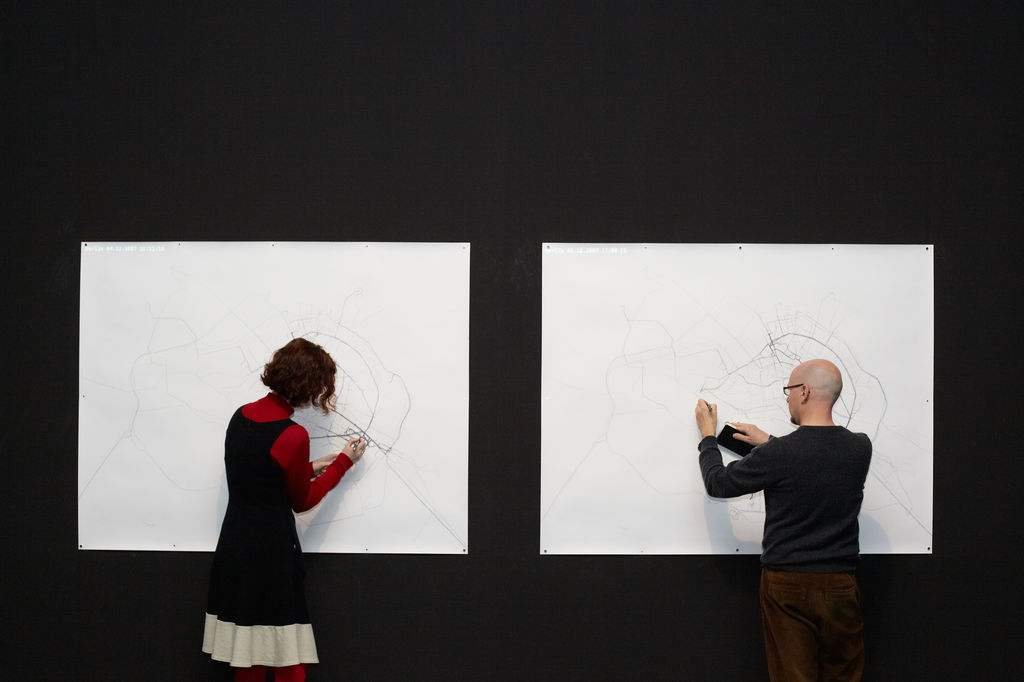
Using the same software that plays the animation of all our traces, written for us in OpenFrameworks by avp::ptr, we are able to trace, line by line, our GPS traces for a specific time-frame and location
We have done this straight onto gallery walls (at Suvi Lehtinen Gallery, Berlin and the Meter Room in Coventry both organised by Elly Clarke) as well as onto large sheets of rag paper for Tracing Mobility. These drawings will feature in the forthcoming exhibition LA <> Berlin at &model in Leeds, curated by Nick Crowe and Ian Rawlinson.